
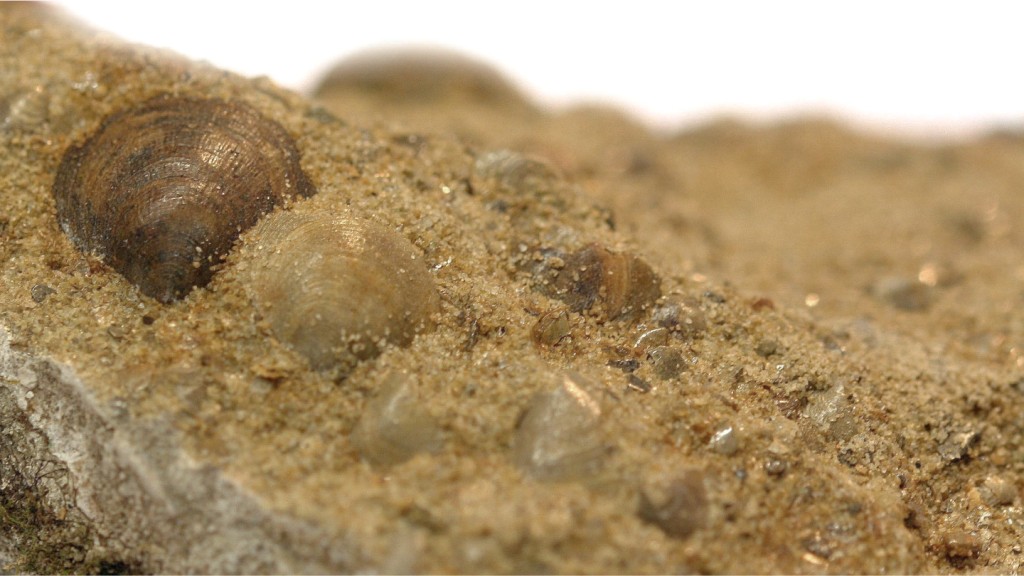
In the European Union, phosphorus is produced only in Finland, and more than 80% of phosphorite and phosphate fertilizers are imported from elsewhere. The EU aims to increase its strategic autonomy in the critical raw materials sector, which requires an increase in domestic production volumes.
Estonia is home to probably the largest phosphorite deposit in Europe. The first phosphorite mine in Estonia started operating in 1924 in Ülgase on the northern coast of the country. In 1940, a phosphorite mine, an enrichment plant and a fertilizer factory were opened in the nearby Maardu. From 1950 to 1989, large-scale phosphorite prospecting surveys were conducted in northern and northeastern Estonia, eventually triggering an anti-mining campaign known as ‘The Phosphorite War’. For the next 30 years, no phosphorite surveys took place in Estonia until the re-establishment of the Geological Survey (GSE) in 2018. In the second half of the 20th century, the phosphorite in northeastern Estonia was thoroughly explored, with a focus on its phosphorus content. Less attention was paid to rare earth elements and vanadium found in the black shale, since there was no major economic demand for these elements.
The use of mineral fertilizers is always associated with a significant risk of pollution. Compared to the phosphorite currently traded on the world market, Estonian phosphorite contains considerably less elements toxic to the biosphere such as cadmium, uranium and arsenic. Fertilizers produced from Estonian phosphorite would also contain less elements harmful to environment, which means that their ecological impact would be considerably smaller. Besides phosphorus, Estonian phosphorite has a high concentration of rare earth elements. In the context of the digital and green transformation, rare earth elements are of central importance in the production and storage of green energy as well as in other high-tech fields. In procuring those critical elements, Europe currently relies on import, over 95% of which is controlled by China. For some metals, the resources found in Estonia could play a significant role in reducing dependence on China.
Recent studies
To manage our mineral resources efficiently, we need up-to-date geological data. From 2020 to 2022, the Geological Survey carried out a survey of phosphorite and associated resources, focusing mainly on the historical data. The main goal of the project was to assess the economic potential of phosphorite and associated resources and to prepare materials for further research. Part of the work was digitizing old phosphorite survey reports, leading to the creation of a database of over 6,000 boreholes and over 21,000 chemical analyzes. Based on this database, a spatial model of phosphorite from the Toolse and Rakvere deposits was created. To validate the historical data, 37 new boreholes were drilled around the Toolse, Rakvere and Aseri deposits. The obtained drill cores were thoroughly analyzed using various geochemical and technical methods. The final report of these works will be completed in the first quarter of 2023. From the preliminary results we can conclude that the quality of the historical data is generally good. As expected, the differences are more marked in areas with fewer historical boreholes or with a variable thickness and/or quality of mineral deposits. In the Rakvere deposit, the contents of rare earth elements were 200–300 grams per tonne and in the Toolse deposit, 300–400 grams per tonne. In the Toolse deposit, the content of rare earth elements is expected to increase to about 1200–1300 grams per tonne in the course of enrichment.
Based on the dataset, a spatial analysis was carried out to find potential exploration areas for subsequent surveys. The criteria for the selection of sites were primarily the volume and quality of the geological reserve, but also its location in relation to populated areas and preliminary environmental impact assessments. In cooperation with Tallinn University of Technology (TalTech), initial mining and enrichment unit prices were calculated for three areas, and the impact of mining on groundwater was assessed. In addition, three more areas were defined based on the criterion of the minimum proportion of privately owned land, while compromising on the volume and quality of the stock. The reports of the study will soon be available in the geological archive of the Survey. The results of the analysis will likely reduce technological risks and public opposition in the extended Aru-Lõuna area, which largely overlaps with the existing Aru-Lõuna limestone quarry. However, one of the downsides of this area is the relatively smaller reserves.
Plans for the near future
As a result of the work done in recent years, it is possible to conduct more detailed phosphorite surveys, and for this purpose, the Estonian Geological Survey, in cooperation with the Ministry of Economic Affairs and Communications, submitted a request to the Research and Development Council for funding further studies from 2023 to 2025 with a total cost of 6.1 million euros. The Research and Development Council supported the project, and the government approved the financing of the project in December 2022.
One of the main goals of the project is to find the best technology for enriching phosphorite in the research area. The research is based on the results of the RITA and ResTA projects conducted by TalTech and the University of Tartu. The aim of the research is to identify the best end products to be produced from phosphorite and ways of co-producing phosphorus and rare earth elements as well as vanadium from black shale on an industrial scale. In developing the technology, we map the emerging environmental impacts and evaluate the economic perspective. If necessary, scaling tests of the best technology will be carried out.
It is important to note that while there are many practical examples of phosphorite enrichment worldwide, there is no efficient technology for the co-production of phosphorus and rare earth elements. Therefore, it is not possible to copy an existing technological solution, but we need to find the most suitable technology considering the local factors and adapt it to our raw materials. We also need to find the best possible solution for valorizing black shale, a rock which is located directly above phosphorite in the geological cross-section of Estonia and contains high concentrations of several heavy metals, and for avoiding the related environmental hazards.
In conclusion, the broader goal of the forthcoming three-year study is to gain a better understanding of the economic potential of Estonian phosphorite and related resources and their environmental impact, so that Estonia would be in a better position to make an informed decision as to whether and how to advance with the valorization of phosphorite and related resources.

