
Revitalising Historical Data with Modern Tools
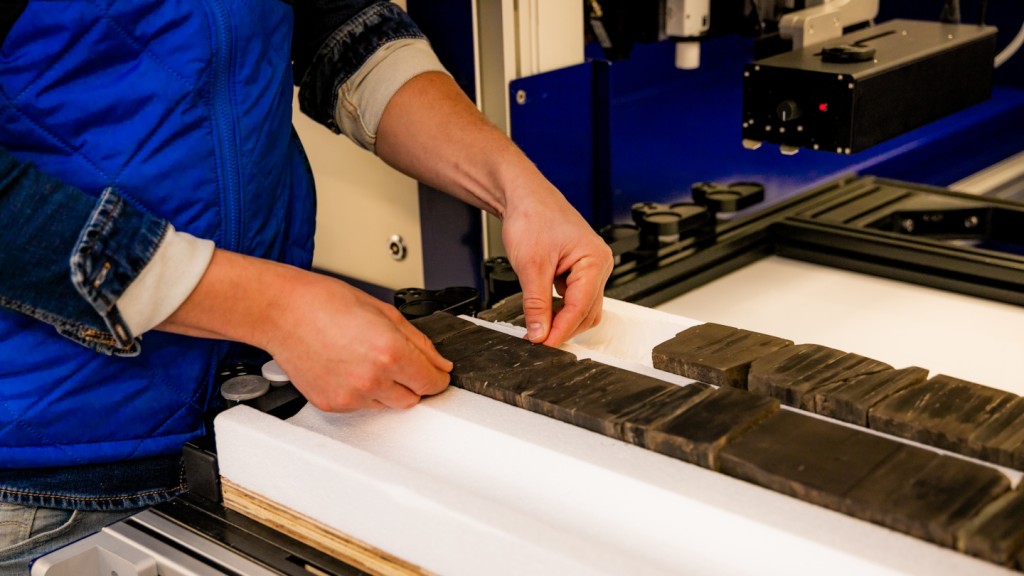
Over the past century, more than 500 drill holes have been drilled in Estonia to study the crystalline basement's structure and search for mineral resources. A significant portion of these cores is preserved at the Arbavere Research Center. This project analysed 22 of these drill cores using a multisensor automatic scanning system – Geotek MSCL-XYZ – for identifying indicators of mineralisation potential. The advanced system provides valuable information about the geochemical and mineralogical changes in the analysed drill core, enabling the tracking of pathfinders of mineralisation occurrences. This approach is significantly more precise than traditional methods, such as bulk rock sampling, offering a modern perspective to re-evaluate historical geological material.
Key Findings: Indicators of Mineralisation
The study identified 180 intervals of interest in the crystalline basement rocks of North Estonia, monitoring eight elemental associations often linked to critical raw materials, including Ni-Co-Cr, Ti-V-Fe, Nb-Y-P, Mo-W-Bi, Sn-Zn-Cd, Cu-Ni (indicative of platinum group metals), K-Sn-Rb-Ga (indicative of lithium), As-Sb-Bi-W-Se-Sn (indicative of precious metals).
These findings are presented as detailed lithological logs and maps, enhancing our understanding of Estonia's crystalline basement and highlighting potential areas for further exploration. Additionally, the analysed drill cores appeared to be more heterogeneous than previously described, demonstrating the benefit of detailed scanning methodology in the current grassroots stage of exploration.
Implications for Europe's Resource Strategy
This research highlights Estonia's potential contribution to Europe's raw material independence. By identifying areas with higher mineralisation potential, the project aligns with the EU's critical raw materials strategy, which emphasiaes securing sustainable and resilient supply chains. The methodology's success demonstrates the value of leveraging modern technology to revisit historical data and suggests new opportunities for mineral exploration in Europe.
Future Exploration Directions
The project recommends further investigation of identified mineralisation intervals through detailed geochemical and petrographic analyses. Targeted follow-up, including additional scanning and laboratory testing, is advised to delineate zones with higher exploration potential. Furthermore, integrating advanced scanning methodologies into geological logging workflows could become a standard practice in the survey, optimising efficiency and accuracy in mineral potential mapping.
Access to Full Report and Data
The full report, along with supplementary digital data (including raw data), is publicly accessible via the Estonian Geological Archive.

